Vibration Therapy for Microcirculation
Our microcirculation can become less effective with aging, sedentary lifestyle and conditions such as diabetes, obesity and vascular disease.
Physical exercise is one of the most important ways to support healthy microcirculation, because skeletal muscle activity naturally increases local blood flow and microvascular perfusion.
Vibration therapy offers a unique way to achieve these effects. By inducing rapidly repeated skeletal muscle contractions, vibration can create a more efficient pumping action that enhances blood flow within the muscles and surrounding tissues.
Content Index
- What Is Microcirculation?
- Why Microcirculation Matters
- What Can Impair Microcirculation?
- Muscle Activity Naturally Stimulates Microcirculation
- How Does Vibration Therapy Improve Microcirculation?
- What Does Research Show?
- Practical Applications of Vibration Therapy for Microcirculation
- Vibration Exercises for Microcirculation
- Summary
What Is Microcirculation?
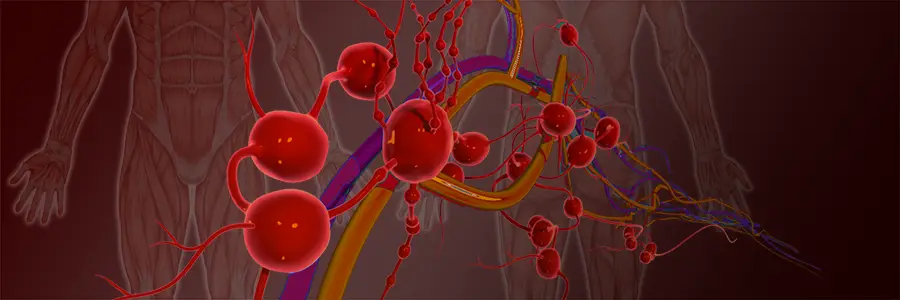
The circulatory system can be viewed as two interconnected levels.
Microcirculation fulfills the fundamental purpose of our circulatory system: delivering fresh, oxygenated blood to tissues and carrying deoxygenated blood away for venous return. Through this process, cells receive the oxygen and nutrients they need while carbon dioxide and metabolic waste products are discharged.
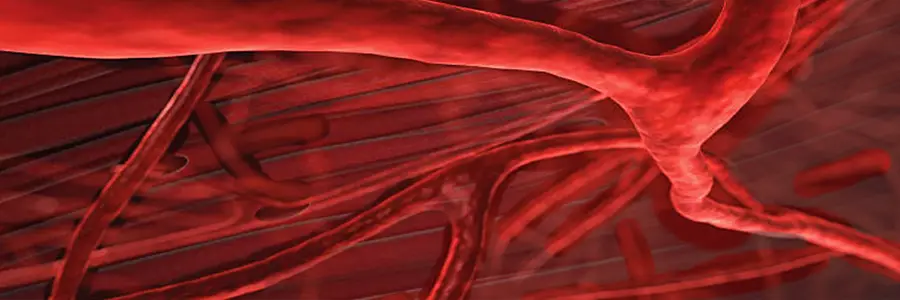
Microcirculation takes place through a network of very small blood vessels:
| Arterioles | Regulate how much blood enters a tissue. |
| Capillaries | Collect blood from the capillary network and begin its return toward the heart. |
| Venules | provide the primary exchange surface between blood and tissue |
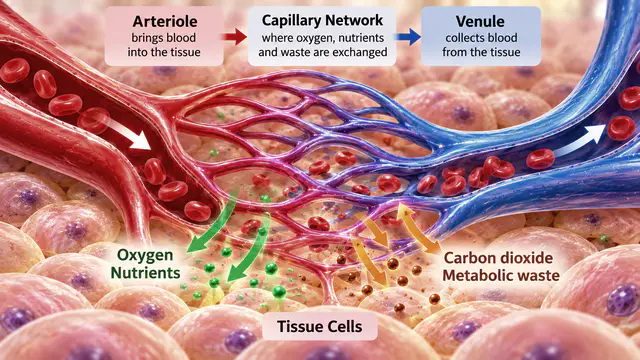
These vessels reach deep into muscles, skin, nerves and organs. At the capillary level, oxygen and nutrients move from the blood toward tissue cells, while carbon dioxide and metabolic waste move in the opposite direction.
Microcirculation is the delivery and exchange end of the circulatory system.
Why Microcirculation Matters
Healthy tissue depends on the effective distribution of blood through its microscopic vascular network — not simply on a strong heartbeat and major arteries.
Good microcirculation allows tissue to continuously receive what it needs and remove what it no longer needs.
| Microcirculation Delivers | Microcirculation Helps Remove |
|---|---|
| Oxygen | Carbon dioxide |
| Glucose and other nutrients | Metabolic waste |
| Hormones | Excess metabolic byproducts |
| Immune and signaling substances | Fluid and substances returned through venous and lymphatic pathways |
This exchange becomes especially important in active skeletal muscle, where the demand for oxygen and nutrients can increase dramatically during muscle contraction.
What Can Impair Microcirculation?
Microcirculation is not simply a set of tiny pipes. It is a highly responsive vascular network that continuously adjusts blood flow according to the needs of local tissues.
The inner lining of blood vessels, called the endothelium, helps regulate vessel dilation and blood distribution. Arterioles also expand or constrict to control how much blood enters the capillary network.
Aging, prolonged physical inactivity and certain chronic health conditions can interfere with these functions. Diabetes, obesity, high blood pressure and vascular disease are commonly associated with microvascular dysfunction.
When microvascular function is impaired, blood may still reach the general area, but its distribution and exchange within the tissue may become less effective.
Signs that may indicate poor microcirculation
Depending on the underlying cause and the tissues affected, impaired microcirculation may be associated with signs and symptoms such as:
- cold hands, feet, fingers or toes;
- numbness, tingling or altered sensation;
- pale, bluish or uneven skin color;
- slow-healing cuts, sores or wounds;
- dry, fragile or unhealthy-looking skin;
- discomfort or unusual sensitivity in the feet and toes;
- reduced tissue tolerance to physical stress or prolonged pressure; and
- slower recovery of muscles and other tissues after physical activity or injury.
These signs and symptoms can have many causes and should not by themselves be considered proof of impaired microcirculation. Persistent symptoms, particularly slow-healing wounds, skin changes or significant changes in sensation, should be medically evaluated.
Muscle Activity Naturally Stimulates Microcirculation
Skeletal muscles and their microvascular networks work closely together.
When a muscle begins to contract, its demand for oxygen and nutrients increases almost immediately. Local blood vessels respond by increasing blood flow and distributing more blood through the working muscle.
This is one reason physical activity is so important for microcirculation. Muscle contraction does not merely move your body — it creates a physiological demand for increased local perfusion.
Repeated muscle contractions also create a mechanical pumping effect on veins and surrounding tissues, assisting venous return and movement of interstitial fluid. Meanwhile, increased blood flow through the microvascular network improves the opportunity for exchange between blood and tissue.
Regular exercise produces longer-term benefits as well. Repeated physical activity can improve vascular function and the capacity of skeletal muscle to receive and distribute blood.
How Does Vibration Therapy Improve Microcirculation?
Vibration therapy adds a distinctive stimulus: rapidly repeated skeletal muscle contractions.
When mechanical vibration is transmitted into the body, the repeated movement stretches and relaxes skeletal muscles. Through the neuromuscular stretch reflex and other muscle responses to vibration, the muscles repeatedly contract in response.
On a vibration plate operating at 30 Hz, for example, the vibration cycle repeats 30 times per second. The resulting muscle activity is very different from the much slower contraction pattern of ordinary voluntary exercise.
This can influence microcirculation through several closely related effects.
Increased Local Blood Flow
Active muscles require greater blood supply. Vibration-induced muscle activity creates metabolic demand and stimulates increased blood flow into the muscles being exercised.
Studies measuring peripheral and skeletal muscle blood flow have found that vibration can produce an immediate increase in blood flow during and after a vibration session.
Increased Microvascular Perfusion
More important for this discussion, research has shown that vibration can increase blood flow within the microvascular network of skeletal muscle itself.
This means the effect is not limited to moving more blood through a major artery. More blood is being perfused through the small vessels embedded within the muscle, where blood-to-tissue exchange actually takes place.
Rapid Skeletal Muscle Pumping
Repeated muscle contractions squeeze veins and surrounding tissues. This creates a dynamic pumping action that assists the movement of venous blood and interstitial fluid.
Vibration makes this pumping action unusually fast. Instead of producing one contraction with each voluntary movement, vibration can induce many muscle responses within a second.
A Strong Stimulus With Relatively Little Movement
This may be one of vibration therapy's most practical advantages.
Walking, running and strength training are excellent ways to stimulate circulation and should remain important forms of physical activity. However, some people cannot comfortably perform enough conventional exercise to generate the desired muscular activity.
A vibration plate allows the muscles to remain highly active while the user performs relatively simple poses and movements.
For older adults, people with limited mobility, or anyone gradually returning to exercise, this can provide a practical additional way to stimulate muscle activity and local blood flow.
What Does Research Show?
Research on vibration and circulation has used several methods to measure its effects, including Doppler ultrasound, laser Doppler imaging, skin blood flow measurement and contrast-enhanced ultrasound of skeletal muscle microcirculation.
Overall, studies have found that appropriately applied whole-body vibration can acutely increase peripheral blood flow, although the response varies with vibration type, frequency, amplitude, exercise posture and the location being measured.
Of particular interest, researchers have directly measured microvascular blood flow inside skeletal muscle before and after whole-body vibration. A short vibration session produced a significant increase in muscle microvascular blood flow, demonstrating that the circulatory response can extend into the small vessels within the exercised tissue.
Studies involving people with type 2 diabetes have also reported increased lower-extremity blood flow, increased skin blood flow and improved measurements of oxygen availability in the feet following certain vibration interventions.
These findings do not mean that vibration therapy cures microvascular disease. They do, however, provide a physiological and research basis for using vibration exercise as a non-pharmacological method to stimulate muscle activity and support microcirculation.
Practical Applications of Vibration Therapy for Microcirculation
For healthy and physically active people, walking, running, strength training and other conventional exercises provide sufficient stimulation for blood circulation and microcirculation.
However, conventional exercise is not always easy or practical. Aging, physical weakness, certain medical conditions, injuries, pain or limited mobility may reduce a person's ability to perform exercises with sufficient intensity or duration.
This is where vibration therapy can offer a practical advantage. Vibration induces rapidly repeated muscle contractions while requiring relatively simple body movements. Exercises can be performed with low physical intensity and little impact on the joints, while still creating substantial muscle activity and stimulating local blood flow.
Seniors and Physically Weak Individuals
Older adults and physically weak individuals may have difficulty walking long distances, performing repeated squats or completing conventional strength exercises. At the same time, reduced physical activity itself can contribute to declining muscle condition and vascular function.
Vibration exercise can provide an accessible way to activate the muscles without requiring strenuous movement. Simple exercises like tiptoe, calf-raise or partial-squat poses can engage the lower-extremity muscles while vibration provides the rapidly repeated stimulus.
This makes vibration therapy particularly practical for gradually increasing muscle activity and supporting peripheral circulation in people who cannot comfortably perform more demanding exercise.
People With Limited Mobility or Certain Health Conditions
Some health conditions can reduce mobility or exercise tolerance while also being associated with impaired peripheral or microvascular function. Diabetes is an important example, particularly when the feet and lower extremities are affected.
Vibration therapy does not treat the underlying disease itself, but it may provide a practical form of physical activity when conventional exercise is difficult. The combination of muscle activation and increased local blood flow may help support microcirculation in the exercised tissues.
The appropriate exercise intensity and method should depend on the individual's physical condition. People with significant vascular disease, neuropathy or other medical conditions should consult a healthcare professional before beginning vibration exercise.
Muscle, Tendon and Ligament Injury Recovery
Injury presents a different challenge. Movement and muscle activity are important during recovery, but high-impact or high-load exercise may not be appropriate, particularly during earlier stages of rehabilitation.
Vibration exercise can provide muscle activation with relatively small body movements and low external impact. Exercise posture can also be adjusted to control how much load is placed on the recovering area.
For muscle, tendon and ligament injuries, this can make vibration useful for different stages of rehabilitation. Increased muscle activity and local circulation may help maintain the physiological environment needed for recovery while allowing exercise intensity to remain relatively low.
Vibration should not be applied indiscriminately to an acute injury. The type of injury, stage of healing and appropriate mechanical loading should be considered before vibration exercise is introduced.
Sports Recovery
Hard training creates high metabolic demand in skeletal muscles. After exercise, continued blood flow helps deliver oxygen and nutrients while carrying away carbon dioxide and metabolic byproducts.
Vibration exercise can be used as a low-intensity activity for sport recovery. Instead of adding another demanding workout, an athlete can use relatively relaxed vibration exercises to activate the muscles and stimulate local circulation without substantial additional impact or exertion.
This makes vibration particularly suitable as an active-recovery exercise following demanding training or sports activities.
A Practical Way to Keep Muscles Active
The common advantage across these applications is simple: vibration allows meaningful muscle activity to be produced with relatively little voluntary movement.
For someone who can exercise normally, vibration can supplement conventional exercise. For someone whose age, physical condition, injury or mobility makes conventional exercise difficult, the low-intensity and low-impact nature of vibration exercise may be even more valuable.
By making muscle activation easier to achieve, vibration therapy provides a practical way to stimulate local blood flow and support microcirculation in the tissues being exercised.
Vibration Exercise for Microcirculation
For microcirculation improvement, the exercise should target the muscles and tissues where increased blood flow is desired.
Effective Vibration Exercise Poses
The lower extremities are particularly well suited for vibration exercise because the feet and legs directly receive vibration from the plate and contain large skeletal muscle groups that can be actively engaged.
Effective exercise poses on a vertical linear vibration plate include:
| Tiptoe | Emphasizes the intrisic feet muscles. |
| Calf raise | Strongly engages the calf muscle pump |
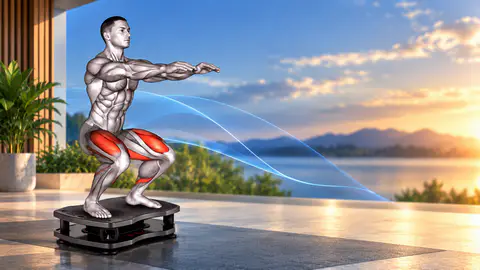
| Squat | Engages the calves, thighs and gluteal muscles |
| Deadlift | Extends muscle engagement through the legs, hips, posterior muscle groups and lower back muscles |
Changing the exercise pose changes which muscles receive the strongest vibration response. This allows vibration exercise to be directed toward specific areas rather than simply exposing the entire body to vibration.
Vibration therapy should not be viewed as a replacement for walking, strength training or medical treatment of vascular disease. Its value is as an additional exercise modality—particularly when the goal is to generate repeated muscle activity and stimulate local circulation with relatively simple physical movement.
Linear Vibration Works Well for Microcirculation
A vertical linear vibration plate transmits repeated up-and-down movement through the feet and into the lower extremities. When used with appropriate exercise poses, this movement can produce strong skeletal muscle responses throughout the feet, calves and thighs.
For microcirculation, the goal is not simply to shake the body. The goal is to create effective muscle activation in the targeted tissues.
Higher-frequency, lower-amplitude linear vibration is particularly well suited to exercises intended to generate rapid muscle contractions without large body displacement. On the VT007, for example, exercises such as tiptoe, calf raise and squat can be performed in the 30–35 Hz range to strongly engage the lower-extremity muscles.
Vibration Exercise Routine
Beginners should start at a lower frequency and gradually progress according to comfort and muscle response.
Multiple short exercise sessions can also be practical because the immediate circulatory response to vibration does not require a long workout.
Summary
Vibration therapy provides a distinctive way to promote microcirculation through rapidly repeated skeletal muscle contractions. Research has demonstrated increases in peripheral blood flow, skin blood flow and skeletal muscle microvascular perfusion following certain vibration interventions.
Large blood vessels transport blood around the body. Microcirculation completes the job by distributing that blood through the tiny vessels embedded within our tissues, where oxygen, nutrients and metabolic products are exchanged.