How Does Vibration Therapy Help Lymphatic Drainage
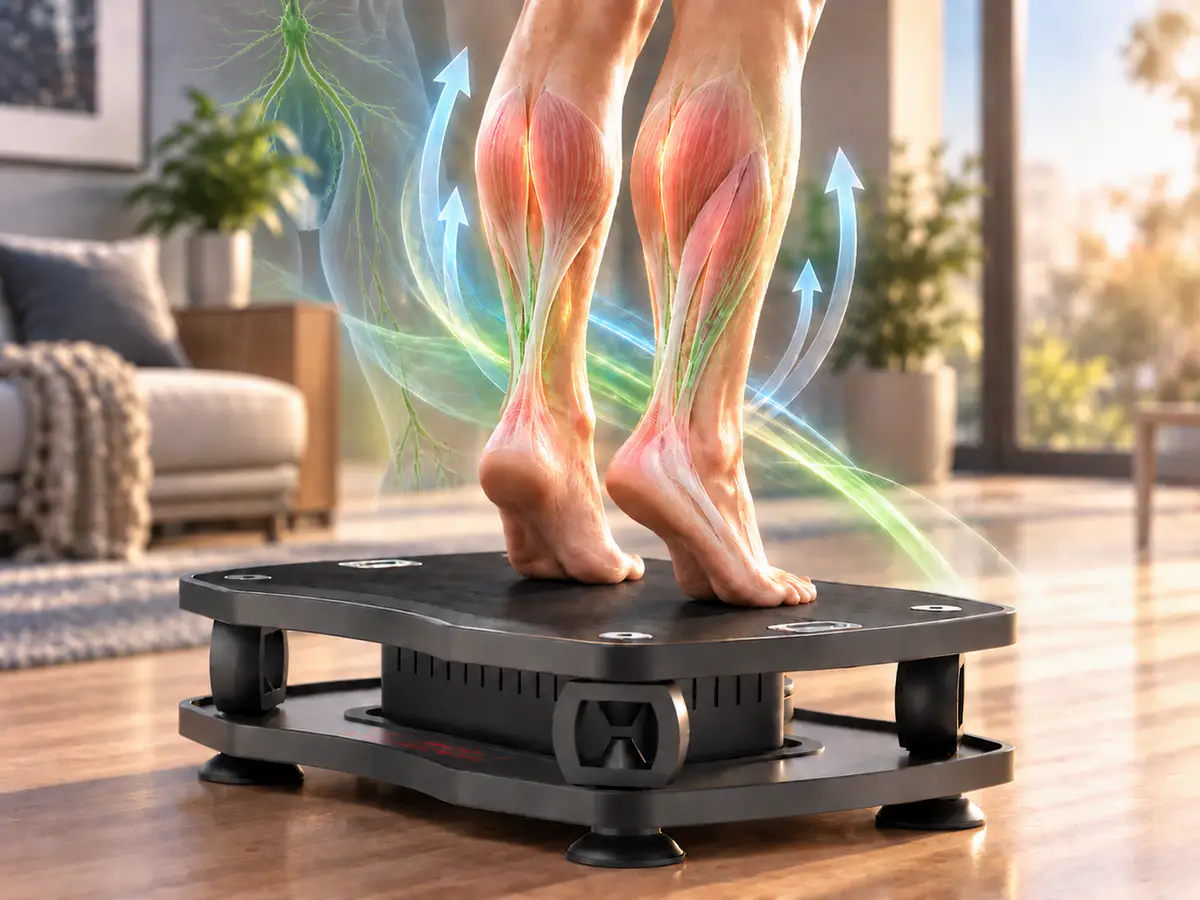
Vibration therapy has been well recognized for improving lymphatic drainage. People with lower-limb lymphatic circulation issues often experience noticeable improvement after a short period of performing calf raises and squats on a vibration plate.
Unlike conventional compression and massage therapies, which provide external assistance to lymph flow, vibration intervention activates the body's own muscles to create a dynamic pumping action that works naturally with the lymphatic system to promote lymph circulation.
Over time, vibration therapy may support more sustained improvement in lymphatic drainage through improving muscle condition and function.
Content Index
- What Drives Lymph Flow?
- What Is Lymphatic Drainage?
- What Is Lymphedema?
- How Does Vibration Therapy Improve Lymphatic Drainage?
- Vibration Exercises for Lymphatic Drainage
- References
What Drives Lymph Flow?
Unlike the cardiovascular system, which has the heart to pump and circulate blood, the lymphatic system does not have a central pump. Lymph flow primarily relies on contractions of the lymphatic vessels themselves, contractions of surrounding skeletal muscles, respiratory movements, and other bodily activities.
The lymphatic system operates at relatively low fluid pressure and flow rates. Under normal conditions, moderate physical activity throughout our daily routine provides sufficient external pumping action to help maintain functional lymph circulation.
However, when lymphatic function is impaired, additional physical activity may be needed to assist lymph flow. Vibration therapy can provide such assistance more effectively by inducing rapidly repeated skeletal muscle contractions.
What Is Lymphatic Drainage?
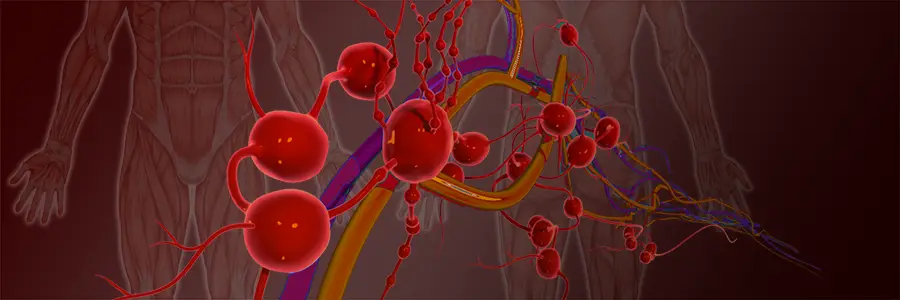
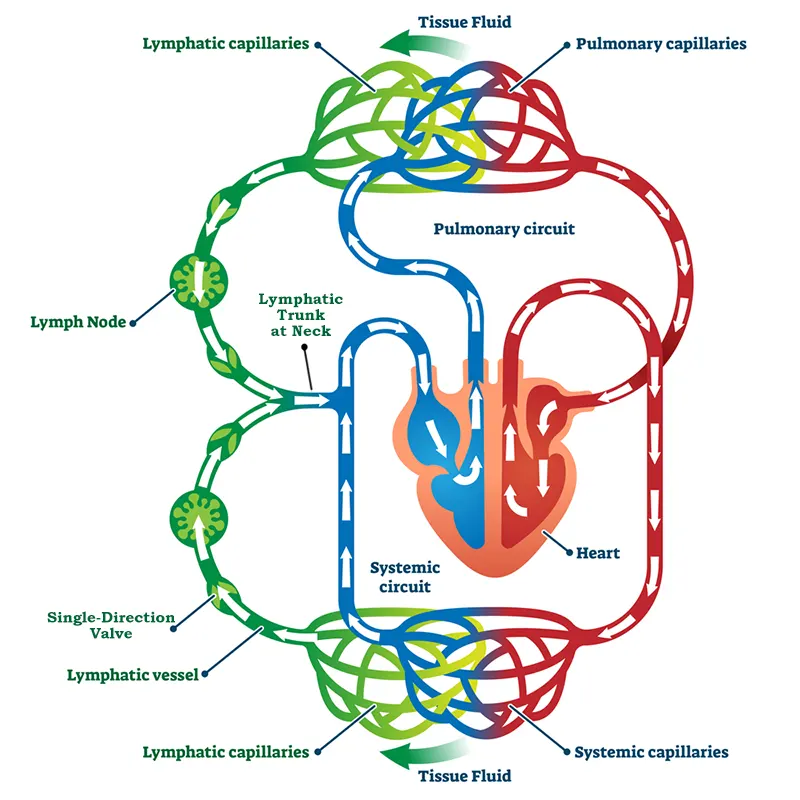
Lymphatic drainage is an essential function of the lymphatic system. It is the process of collecting excess fluid, proteins, metabolic waste and other substances from tissues and transporting them through the lymphatic system. The collected fluid, known as lymph, passes through lymph nodes before eventually returning to the bloodstream.
The lymphatic system uses one-way valves to maintain lymph flow in the proper direction. Lymph travels from lymphatic capillaries within tissues into progressively larger lymphatic vessels, passes through lymph nodes, and ultimately enters the lymphatic ducts that return it to the venous circulation.
What Is Lymphedema?
When the lymphatic system is impaired and cannot adequately drain fluid from tissues, protein-rich fluid can accumulate in the affected area, causing persistent swelling. This medical condition is called lymphedema.
Lymphedema can result from abnormalities of the lymphatic system or from damage caused by surgery, radiation therapy, infection, injury, or other medical conditions. Lack of physical activity can further reduce the external pumping action that assists lymph flow and may contribute to fluid accumulation.
Lymphedema most commonly affects the arms and legs. Once developed, it can be difficult to reverse completely and often requires ongoing management. Early intervention and consistent management are important for controlling swelling and reducing complications.
How Does Vibration Therapy Improve Lymphatic Drainage?
Vibration can induce involuntary, rapidly repeated skeletal muscle contractions through the natural stretch reflex response of the neuromuscular system.
These repeated muscle contractions create a dynamic pumping effect on lymphatic vessels intertwined with and surrounding the muscles. The resulting external pressure helps propel lymph through the vessels, while one-way valves maintain its direction of flow. This physiological process is commonly referred to as the skeletal muscle pump.
The repeated compression and relaxation of tissues during muscle contraction may also promote the movement of interstitial fluid toward lymphatic capillaries, supporting fluid exchange and lymphatic drainage.
In this way, vibration therapy works synergistically with the natural mechanisms of the lymphatic system. Beyond the immediate pumping effect, continued vibration exercise may also support lymphatic drainage over time through better muscle condition and function.
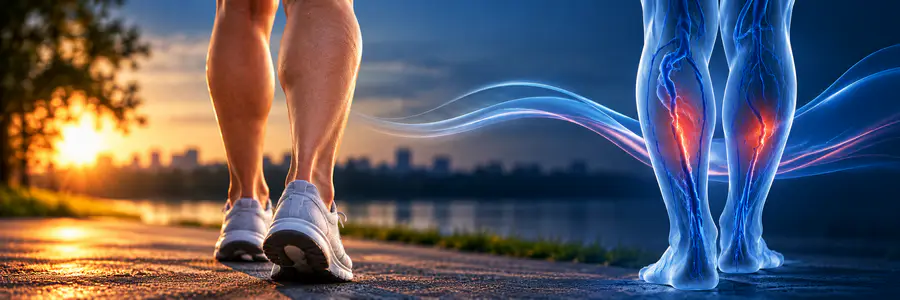
Lymphedema commonly affects the lower limbs, where skeletal muscle activity plays an important role in assisting lymph flow. A vertical vibration plate can effectively activate the muscles of the legs and feet, making it particularly suitable for supporting lower-limb lymphatic drainage.
A vibration frequency range of 30 Hz to 35 Hz is recommended for activating the major leg muscles. Within this range, vibration can produce strong muscle responses associated with the resonance and damping characteristics of skeletal muscle.
Vibration Exercises for Lymphatic Drainage
Tiptoe exercises, calf raises, squats and hip flexor stretch performed on a linear vibration plate, such as the VT007, can effectively engage the leg muscles and enhance the skeletal muscle pump function.
Multiple short exercise sessions throughout the day are recommended. This allows muscles to rest and recover between sessions while gradually improving muscle condition and local microcirculation.
References
- Understanding of Lymph Circulation
- By Olivier STÜCKER, Catherine PONS-HIMBERT, and Elisabeth LAEMMEL Université Paris
- Lymphedema - Symptoms, Causes, and Treatment
- By Mayor Clinic